Executive Summary: Tiny House Nation Comes to the Data Center
A few years ago you couldn’t flip through cable without landing on Tiny House Nation. Everyone loved the idea. cheaper, faster, delivered on a trailer, move in next week. And then a funny thing happened. A lot of the people who bought them quietly moved back into real houses. It turns out a space that is great on TV isn’t always a space you want to live and work in every day.
Walking the floor at YOTTA this week, the word on every-other booth seemed to be modular. Modular power. Modular cooling. Modular racking. Modular hot-aisle containment. Modular everything. MBA Energy & Industrial is a fan of the right modules. In fact, MBA builds both permanent and modular facilities. Shop-built skids and assemblies save real time in the field and deliver real quality. But we’ve seen this movie before in the renewable energy space, and we know how the second act goes.
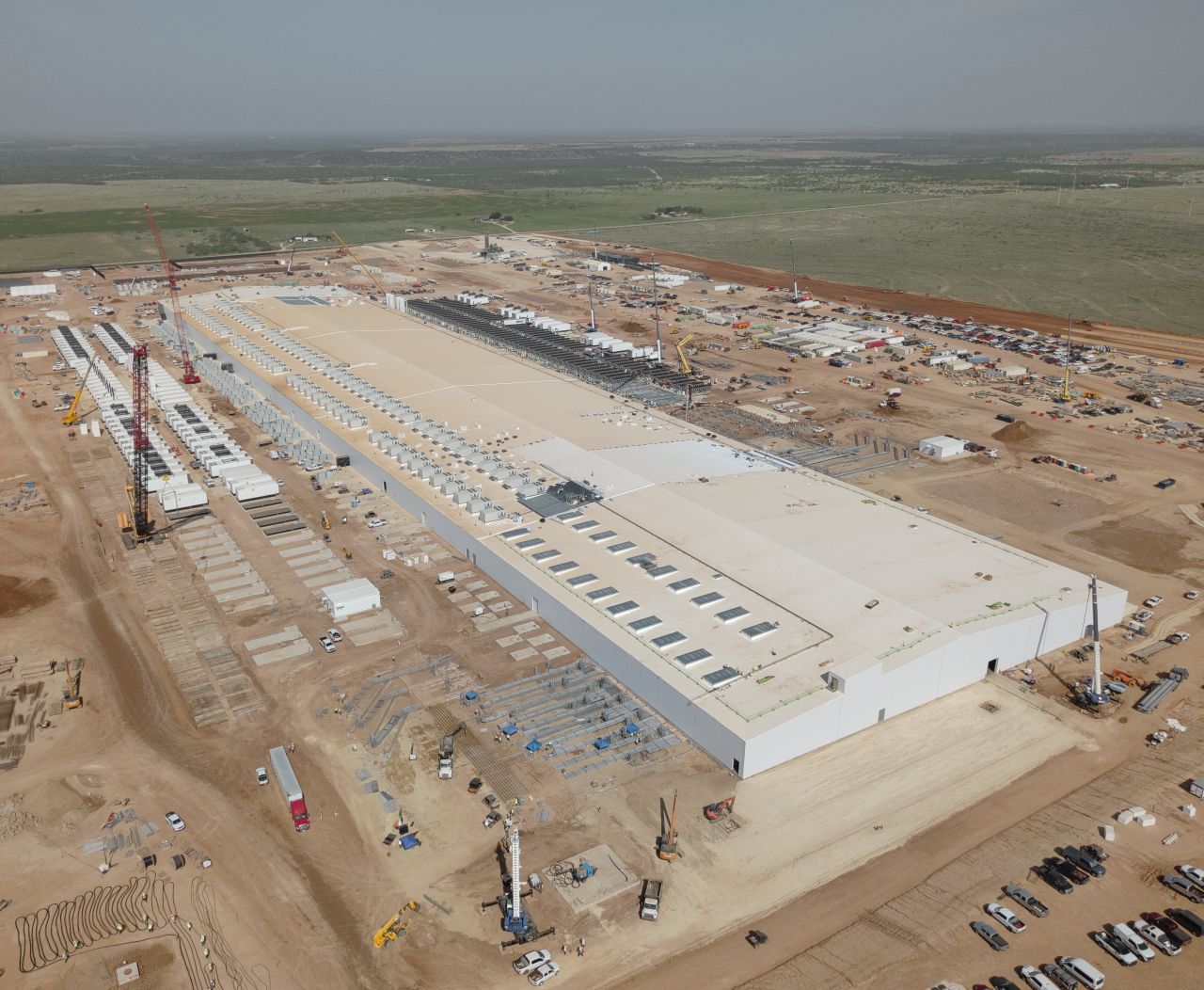
Our position is simple: build permanent where it matters, and modular where it moves. A large, permanent structure (the “house”) with modular systems (the “appliances”) integrated so they can be pulled and replaced as technology changes. And with MBA’s speed (almost 800,000 sq ft of steel in only 127 days from first column set to final top-out), owners no longer have to choose between permanent and fast.
The Modular Moment
The pull toward modular is easy to understand. AI and high-density compute have compressed timelines to the point where every week of schedule is worth real money to an owner, and the supply chain for switchgear, generators, chillers and CDU’s is still stretched. Modular vendors are answering with a compelling pitch: build it in a factory, test it before it ships, set it on a pad, plug it in and energize.
And to be fair, a lot of that pitch is true. The question isn’t whether modular works, it does. The question is how much of a facility should be modular, and which parts. When the answer becomes “all of it,” owners start trading long-term value for short-term speed, and that is a trade the renewable energy industry has already made, and is now unwinding.
Where Modular Earns Its Place
MBA embraces modular where it makes sense, and there are plenty of places it does. Work performed in a fabricator’s shop happens in a controlled environment: no rain days, no 105-degree Texas afternoons, consistent lighting, jigs and fixtures, and a QA/QC process that is easier to enforce on a shop floor than on a muddy site. In other words, the shop is simply a better place to build certain things.
The best candidates for modular share a few traits:
- Repeatable and standardized: electrical skids, prefabricated power modules, pump and piping skids, and cooling distribution units that are built the same way many times over.
- Technology with a short life cycle: equipment that will be upgraded or replaced well before the building around it wears out.
- Factory-testable: assemblies that benefit from being tested and commissioned before they ever hit the truck.
- Labor-intensive in the field: scopes where pulling hours off the jobsite reduces risk, congestion and safety exposure. The current strain on available electricians is one example.
That is where modular belongs. The trouble starts when it moves beyond the equipment and becomes the building itself.
A Lesson We’ve Already Learned: Renewable O&M Buildings
Why is MBA writing about modular in a data center paper? Is it because we have a grudge against trailers, or because permanent buildings are better for a builder’s bottom line? No. MBA doesn’t really have a dog in this fight. We build both permanent and modular facilities. At the end of the day, we want what is best and most efficient for our clients, and that means making sure each client gets the right facility for its intended need and use. From our experience, that typically leads us down the route of designing and engineering a permanent facility, because we watched this exact cycle play out in renewable energy just a few years ago.
As wind, solar and battery storage projects scaled up, many developers moved away from stick-built or pre-engineered metal building (PEMB) O&M facilities and toward modular buildings. On paper it made perfect sense. Cheaper, quicker, and one less line item on a Cap-Ex budget that was already under pressure. The modules showed up, got set, and the site had an office.
Then the people showed up. The technicians, site managers and crews who spend their careers at these sites didn’t love working in a space that felt temporary. Some of the fear about permanent buildings was understandable, as no one wants to overspend on a support building. However, the reality is that the workforce you are trying to recruit and keep notices the difference between a real facility and a box on blocks. And today, many of those owners are going back to permanent O&M facilities on their newer sites.
The tiny house was great for the first season of the show. It just wasn’t where everyone wanted to live once the novelty wore off.
The Adaptability Problem
The second lesson is less about people and more about change. A fully modular facility is usually designed and built around a very specific tenant, a very specific rack density and a very specific cooling strategy, all of which are true on the day it energizes. In the AI era, that day doesn’t last long. Rack densities that were considered extreme two years ago are now common, and liquid cooling has gone from a niche to the default conversation in the span of a few product cycles.
When a purpose-built module no longer fits the technology, the options are limited: rework something that was never meant to be reworked, or pull it out and start over. A large, permanent structure is different. Clear spans, generous floor-to-structure heights, structural capacity for heavier loads and room to reroute power and piping give an owner the flexibility to change what’s inside the building without replacing the building itself. In other words, a tiny house was built for one person’s life. A real house can be remodeled for the next one.
The Hybrid Model: Build the House, Swap the Appliances
Nobody tears down their house because the refrigerator is outdated. You build the kitchen right (the right space, the right power, the right plumbing) and when a better refrigerator comes along, you roll the old one out and slide the new one in. That is exactly how MBA believes a data center or industrial facility should be built.
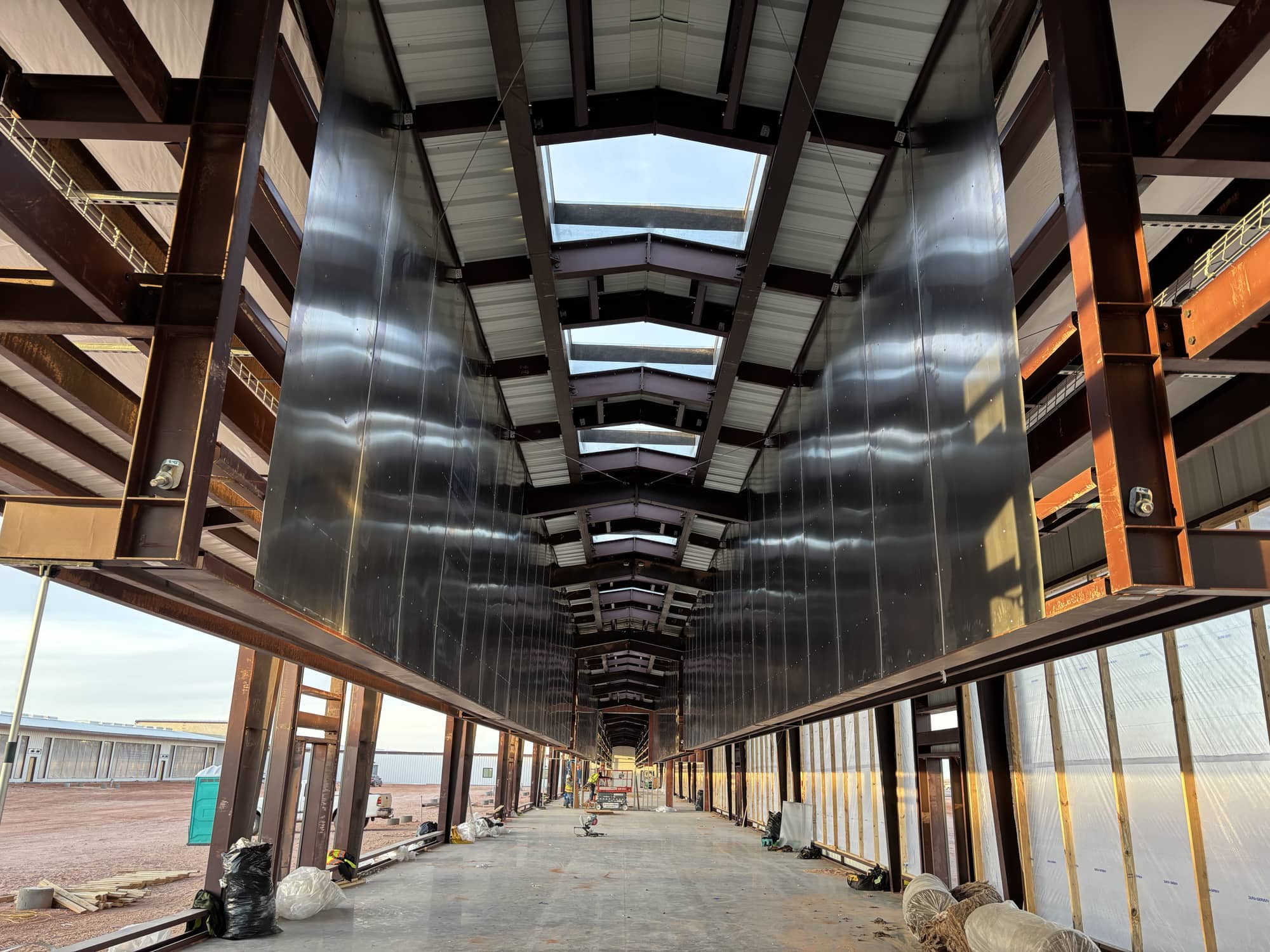
The hybrid model puts the long-life elements into a large, permanent structure: foundations, structural steel, roof and envelope, and the spaces where people actually work every day. The short-life, fast-moving technology (power skids, cooling and CDU’s, racking, hot-aisle containment) is delivered as shop-built modules and integrated into that structure with planned pathways, clearances and connection points so it can be removed and replaced without a remodel.
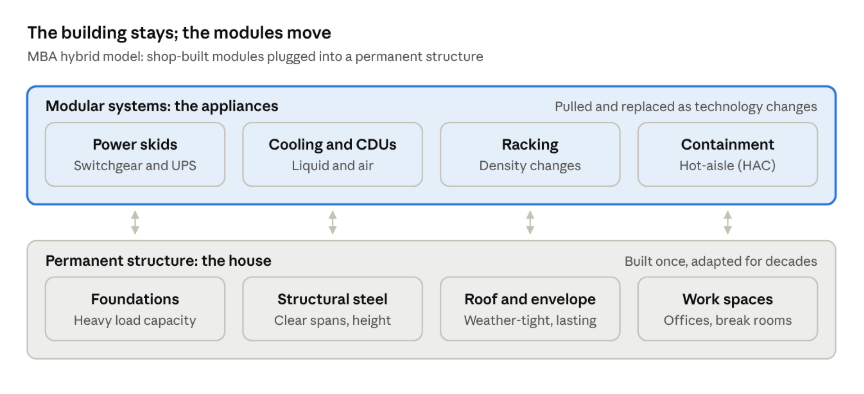
The owner gets the best of both worlds: factory quality and field speed on the equipment, and a real building that can outlive three or four generations of the technology inside it.
Speed Isn’t Modular’s Alone
The strongest argument for going all-modular has always been speed. So let’s talk about speed. On a recent MBA project, our team set the first column and reached final top-out on almost 800,000 sq ft of structure in only 127 calendar days. In other words, that’s more than 6,000 sq ft of permanent building going up every single day, start to finish.
That pace doesn’t come from cutting corners. It comes from strategic partnerships with vendors forged over years of working together to reduce supply chain risk. It also comes from our on-site superintendents and the MBA culture they bring to every jobsite, our long-standing relationships with best-in-class steel erectors and subcontractors, and front-end planning that sequences the permanent structure and the modular equipment so they arrive and come together without waiting on each other. When the building can go up that fast, the “modular is faster” argument loses most of its teeth, and the owner keeps a permanent asset instead of a temporary one.
Five Questions to Ask Before You Go All-Modular
- How long does this piece need to last? If it will be upgraded or replaced long before the building wears out, like power skids, cooling or racking, it’s a strong modular candidate. If it needs to last as long as the building itself, 30 years or more, build it permanent.
- Who will work here every day, and for how long? People-facing spaces like offices, control rooms, break rooms and warehouses are where “temporary” gets noticed first.
- What happens when the tenant or the technology changes? Ask whether the structure can accept higher densities, heavier equipment and a different cooling strategy without a teardown.
- Is modular actually faster on this schedule? Compare the modular delivery date against a permanent structure built at MBA’s pace, not an average one.
- What is the total cost over the life of the site? Include the cost of replacing or rebuilding a module that no longer fits, not just the day-one price tag.
Built to Last, Built to Change, Built by MBA
Modular isn’t the enemy, temporary is. MBA Energy & Industrial builds both, and we will happily integrate the best shop-built power, cooling and containment modules on the market, inside a permanent facility that your people are proud to work in and that your business can adapt for decades. MBA has done it, MBA is doing it and MBA can do it for your facility.
Tiny House Nation made for great TV. But when it’s time to build something you plan to live with for the next 30 years, build the house and let the appliances do the changing.
MBA is known as “The Doers” and we say Yes! On an industrial Scale. Let’s talk about your next project at mba-nrg.com.
By Phil Garner, Vice President of Business Development for MBA Energy & Industrial